
SHV Box Hill Clinic
Mon-Fri 9am-5pm
901 Whitehorse Road Box Hill VIC 3128
shvic.org.au
1800 013 952

The copper IUD can also be used for emergency contraception instead of the emergency contraceptive pill (‘morning after pill’). Once inserted, a copper IUD can be left in for 5 – 10 years (depending on the type) and used as an ongoing method of contraception.
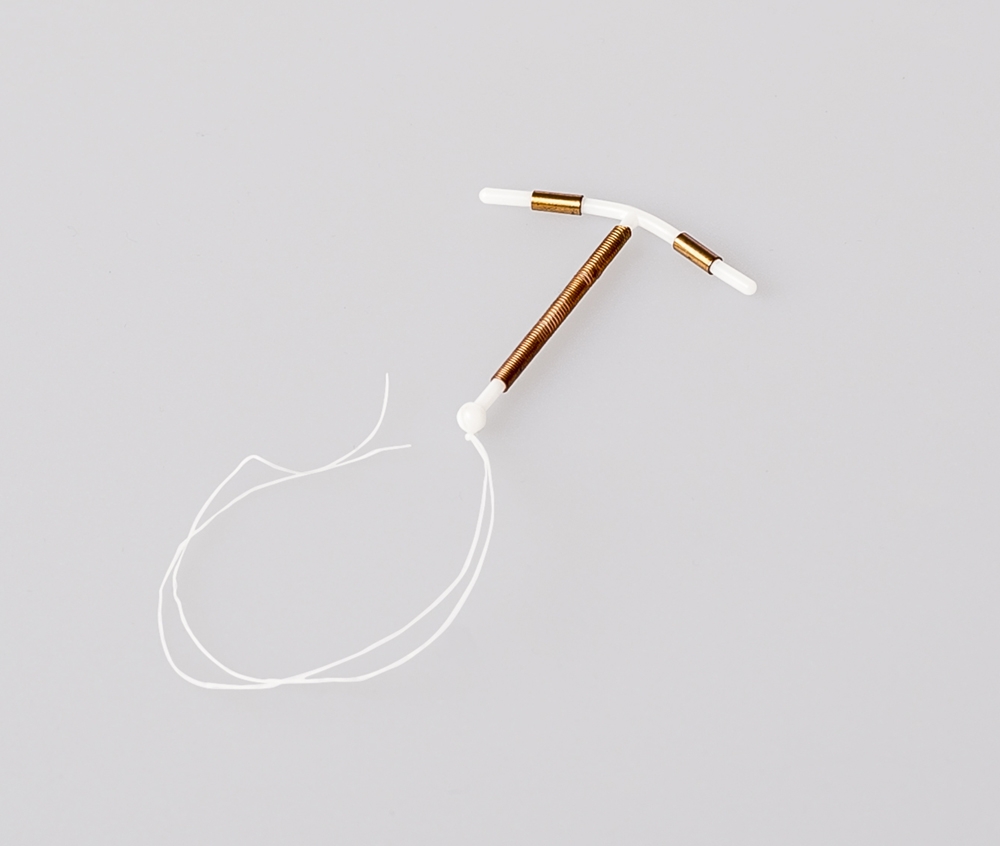
Photo of copper IUD
The copper IUDs are more than 99% effective at preventing pregnancy and can last for up to 5 – 10 years (depending on the type). A copper IUD can be used for contraception until menopause if inserted when you are 40 years of age or older.
If you are using the copper IUD for emergency contraception, you need to use it within 5 days or 120 hours after unprotected sex.
IUDs affect the way sperm move and survive in the uterus (womb), stopping sperm from meeting and fertilising an egg. Copper IUDs can also change the lining of the uterus, making it difficult for a fertilised egg to stick to the lining to start a pregnancy.
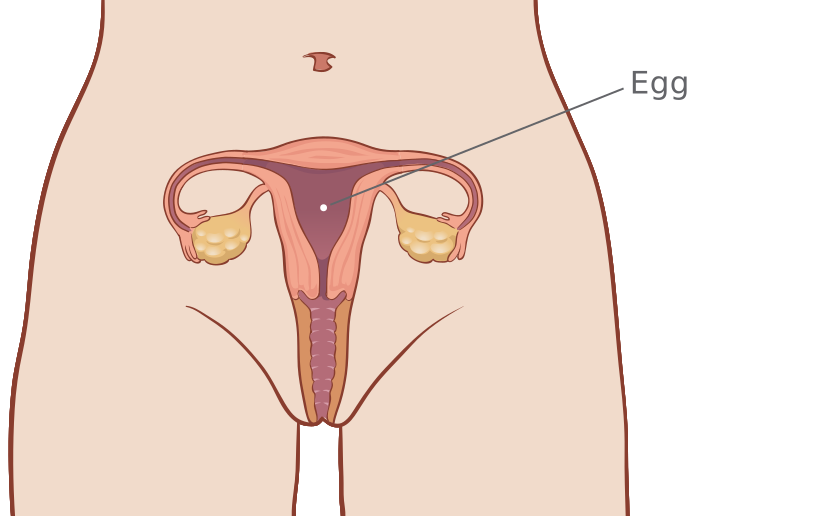
Illustration of egg not sticking to uterus lining
The copper IUD is inserted inside the uterus (womb) by a trained doctor or nurse. You can choose to have a local anaesthetic or sedation while it is inserted. The IUD insertion takes around 15 minutes but you will be in the clinic for an hour or more. See below for a video about IUDs and how to help prepare for and manage pain from an IUD insertion.
The IUD has a fine nylon string attached to it which comes out through the cervix (opening to the uterus/womb). The string cannot be seen and it does not hang out of the vagina. If you feel high up inside your vagina, you can check that the string is there and know the IUD is still in place. It is good to do this every month. If the string feels like it is shorter or longer than normal or you cannot feel the string at all, the IUD may have shifted and you should see a doctor or nurse.
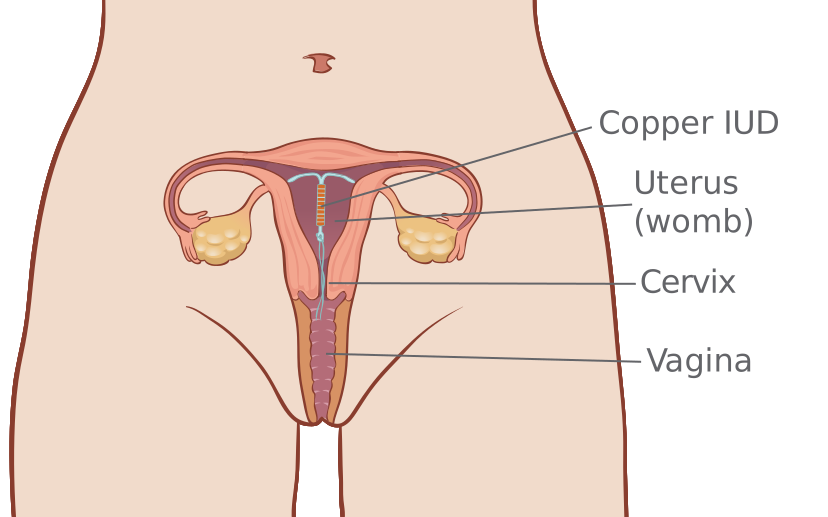
Illustration of copper IUD in uterus (womb)
When the copper IUD is inserted (put in) it starts working straight away to prevent pregnancy.
Your doctor or nurse will provide a script which you can take to the pharmacy, who will sell you the copper IUD. Sometimes you can buy the IUD from the clinic. You will need to return to the clinic to have the IUD inserted.
The copper IUD might not work if it:
If you cannot feel the IUD strings, you can abstain from sex or use condoms until a doctor or nurse confirms the IUD is in the right place. If you have had unprotected sex in the 5 days before you notice the string missing, you might need emergency contraception.
Once the copper IUD is in for more than 5 – 10 years (depending on the type), you can abstain from sex or use condoms until you can have it replaced. If you have unprotected sex and your IUD has been in for more than 5 – 10 years, you might need emergency contraception.
It is important that you see a doctor or nurse as soon as possible and have the IUD removed. The doctor or nurse will also need to rule out a pregnancy in your fallopian tubes (ectopic pregnancy). If the IUD is removed, you can continue the pregnancy or have an abortion. If the IUD cannot be removed and you continue the pregnancy, there is a higher risk of losing the pregnancy.
The copper IUD can be inserted straight after you give birth. If not inserted straight after you give birth, then you need to wait until at least four weeks later. The copper IUD is safe to use if you are breastfeeding.
The copper IUD can be removed at any time by a doctor or a nurse. Your fertility will quickly return to what is normal for you.
Copyright © 2025 Sexual Health Victoria. All rights reserved.